
Nowadays, lack of physical activity is often linked to chronic diseases as well as to psychological distress. Thus, promoting physical activity is no longer only of interest to athletes or for persons who wish to lose weight. Instead, a wide range of offer of supervised exercise programs, especially of strength training, within a Medical Fitness Center for all age groups and with different degrees of physical ability should be promoted in the long term for physical as well as for mental health.
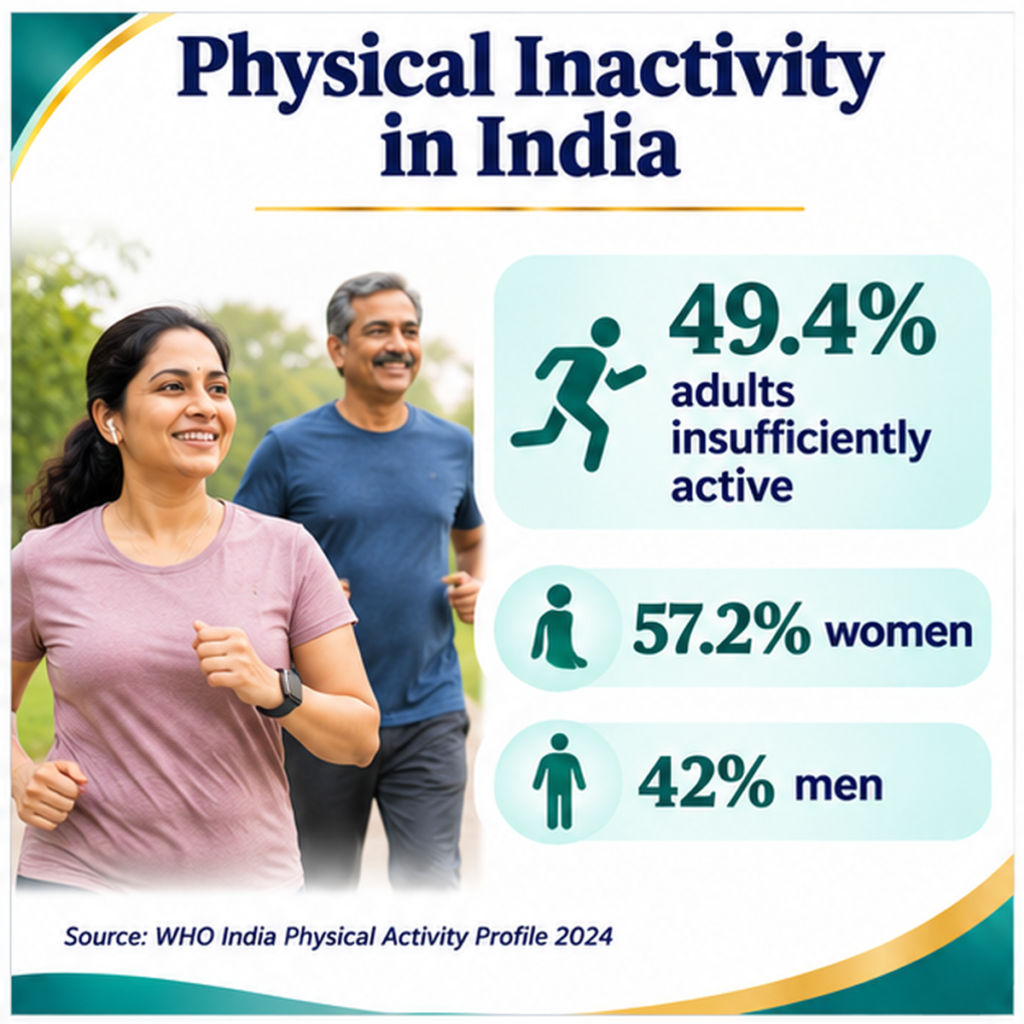
Data from the World Health Organization’s 2024 India Physical Activity Profile reports that about 49.4% of all adults in India are insufficiently active to meet age-appropriate criteria. Women comprise 57.2% of insufficiently active adults, while men account for 42%.
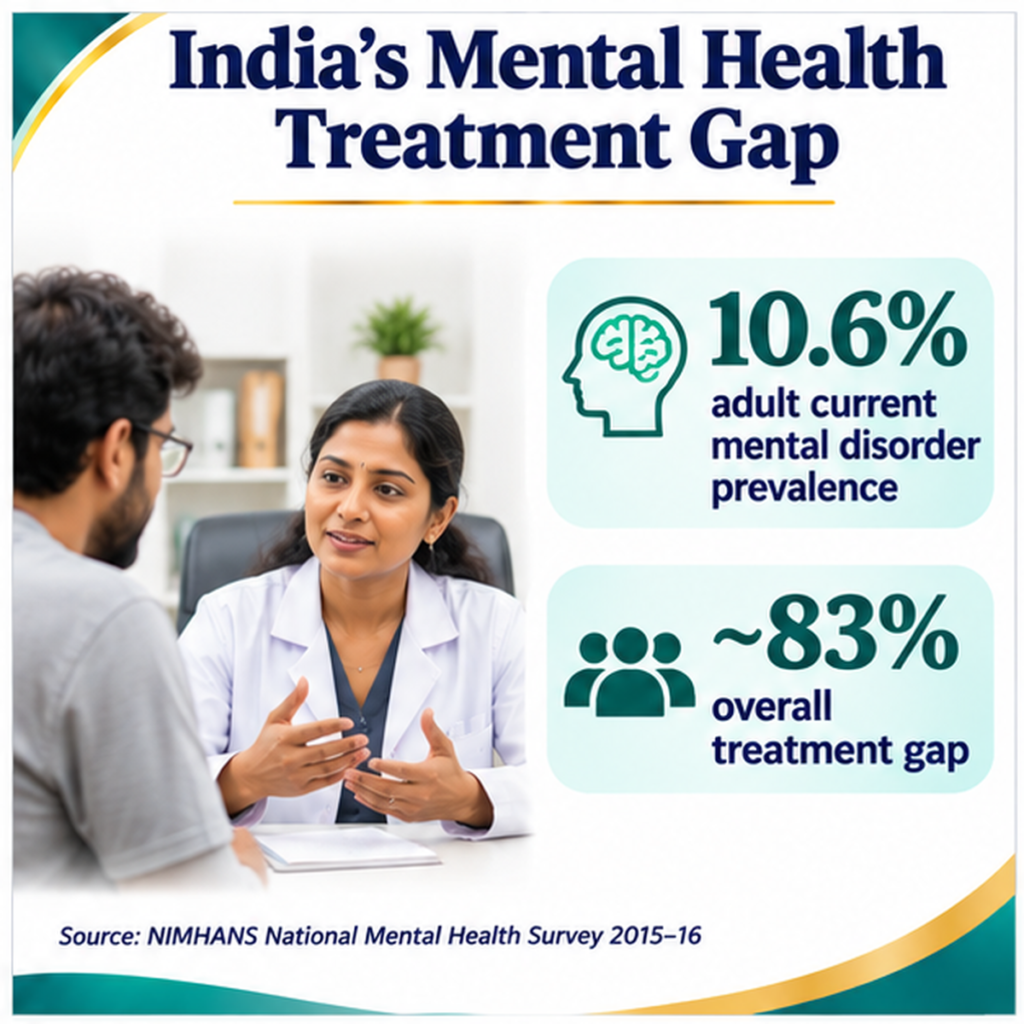
National Mental Health Survey (NMHS), conducted by NIMHANS across India during 2015–2016, reported a 10.6% prevalence of current psychiatric disorders and a 13.7% lifetime prevalence of mental disorders in India.
Statistics proving the adverse effect of inactivity on general health have been pouring in year after year. On the other hand, a host of psychiatric conditions affecting motivation, sleep and energy, among other things, need to be treated with due care and in an appropriate manner.
Psychiatric assessment of symptoms of mental health problems such as depression and anxiety can be carried out by a Psychiatrist in Mahim, but these need to be linked with programs of physical activity to promote general health and well-being. This is to ensure that physical activity is not misused as an alternative or additional method of treating established psychiatric disorders.
1. India’s Physical Inactivity Problem Requires Attention
India’s growing problem of lack of physical activity in its preventive health care.
Lack of physical activity in preventive health care is a major problem in India. The World Health Organization reported that 74% of adolescents in India are not active enough, and this percentage decreases to 49.4% for adults.
In a National Study on Adult Chronic Disease Prevalence conducted by ICMR in four states of the country, i.e., Tamil Nadu, Maharashtra, Jharkhand, and Chandigarh, with a study population of 14227 adults, 54.4% were found to be inactive.
Another National Study on Adult Chronic Disease Prevalence conducted by ICMR found that 54.4% of 14,227 adults studied in four states of the country (Tamil Nadu, Maharashtra, Jharkhand and Chandigarh) were inactive. The prevalence of physical inactivity was found to be higher among urban participants (65%) as compared to their rural counterparts (50%).
However, results from these studies need to be viewed with caution as these are different studies conducted with different methodologies on different populations.
This finding alone can be used to push for increasing physical activity in different settings and across the life-course.
Staying active has been proven to keep your heart healthy, build muscle, improve sleep, and boost your mood.
2. India’s Mental Healthcare Gap Remains Substantial
Major Public Health Problem in India: Mental disorders constitute a major public health problem in India, as revealed by the National Mental Health Survey (NMHS).
Thirteen point five percent of the metropolitan population and 6.9% of the rural population had mental morbidity.
The total treatment gap for all mental health problems was about 83%, and for major depressive disorder it was about 85.2%.
The treatment gap for major depressive disorder was approximately 85.2%.
Therefore, the vast majority of people suffering from mental health problems are not receiving the necessary treatment to cure them.
However, there are many barriers to the delivery of mental health care, including lack of awareness, stigma, cost, shortage of trained mental health human resources, and uneven geographic distribution.
Recognising mental health problems early and providing good-quality psychiatric care on a sustainable and ongoing basis is needed to improve the delivery of mental health care in Pakistan.
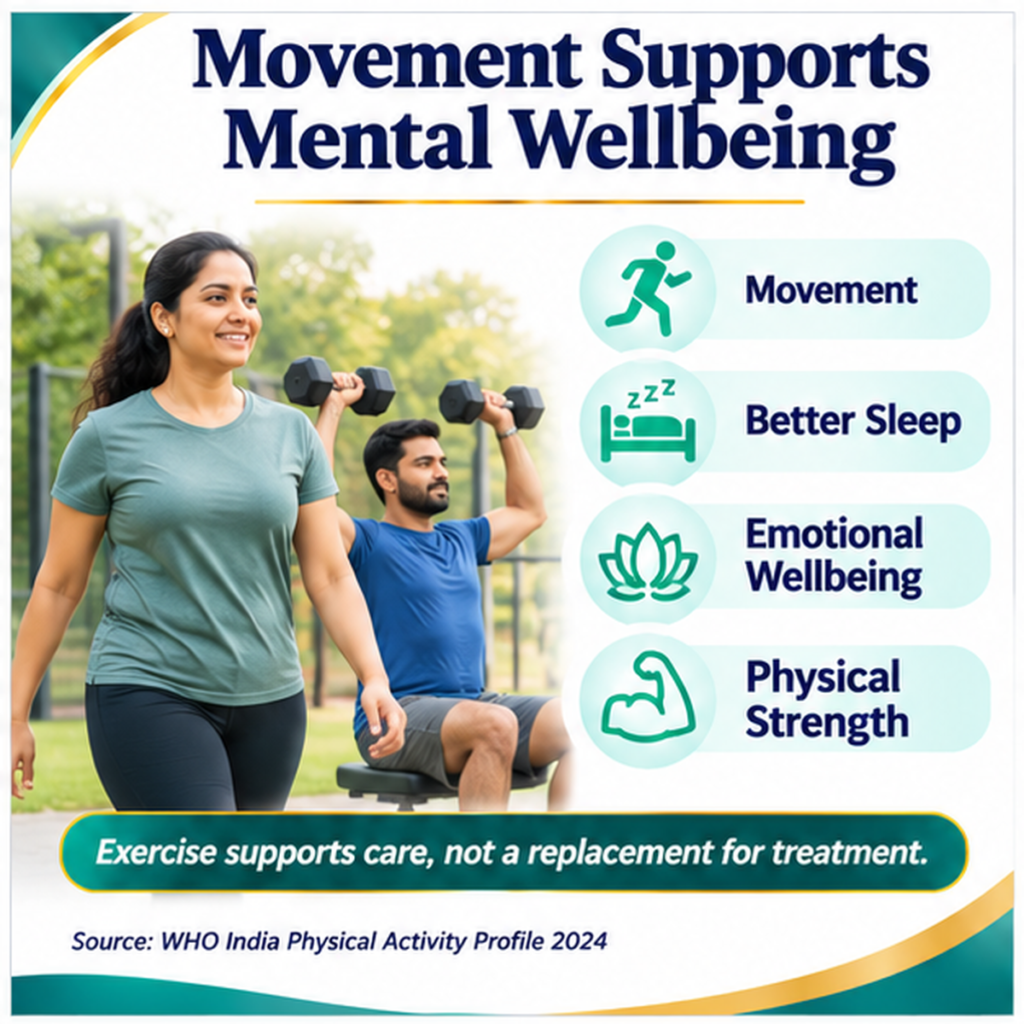
Physical activity alone is not likely to address the aforementioned treatment gaps in mental health care.
3. Physical Activity Can Support Mental Wellbeing
Physical activity and exercise for the treatment of mental health problems have been proven in many international clinical studies.
Physical activity has a positive effect on anxiety and depression. It can also have a positive effect on other health issues such as sleep and physical health. As stated by the World Health Organization (WHO), physical activity has many very positive effects on people’s health.
In addition to improving health, physical activity can be very structured and of great interest and thus help a person regain their physical self-esteem.
Mildly depressed individuals are often offered physical activity or exercise as part of their treatment.
The link between physical activity and depression is not the same for everyone with psychological problems.
As in all relationships, many variables need to be taken into account in relation to other psychiatric symptoms, for example, severe panic, fatigue, etc., and their degree.
That degree of suffering and any physical illness the person is suffering from also has to be taken into account by the individual giving the treatment.
In essence, though, long-term psychological problems can only be solved by encouraging individuals to do regular amounts of suitable physical activity in the long term.
4. Medical Fitness Offers a More Individualised Approach
Most fitness programs aim to help members lose weight, increase their endurance, or even change their body shape and appearance.
There is more to fitness than weight loss; to define someone in better physical shape, medical fitness includes various aspects of health in an individual that a typical fitness program does not consider in designing programs for its members.
Typically, Strength Training, Aerobics, Balance Training, and Functional Movement for Rehabilitation of activities of daily living are prescribed for individuals with chronic medical conditions.
Rehabilitation of a person to a full exercise program via progressive movement of exercises that may aid the individual recovering from an injury. A person with chronic conditions such as diabetes, high blood pressure, or asthma can have appropriate exercise chosen for them, taking into account their medical history, current symptoms, and limitations.
Helping a person go from full rehabilitation via physical exercise back to full exercise programs via a progressive series of movements and exercises to enhance the functional capacity of the individual.
Slow and structured physical exercise or other physical exercise indicated for the sufferer of chronic conditions of physical symptoms of anxiety in addition to indicated mental health care and/or treatment for the sufferer of chronic conditions of mental health problems.
Workness assesses patients for improvement in their functional capacity to perform physical activity on an ongoing basis and assesses overall wellness of the patient as opposed to the physical appearance of the patient.
Determine if any physical symptoms require further medical evaluation.
5. India’s Healthcare Systems Need Better Coordination
Various Mental Health Initiatives operating across India are striving to improve mental health care accessibility for millions of people suffering from mental health problems.
The Tele-MANAS service has received over 47.75 million calls since its launch in October 2022 to date, as per data shared by the Ministry of Health and Family Welfare with MINT.
Service is being offered from 53 mental health facilities in 36 States/UTs across the country.
Here again, the figures provided above are for service utilization as opposed to the number of persons who completed a course of treatment for a psychiatric disorder.
For the time being, however, this data gives an insight into the high potential of accessible mental health support.
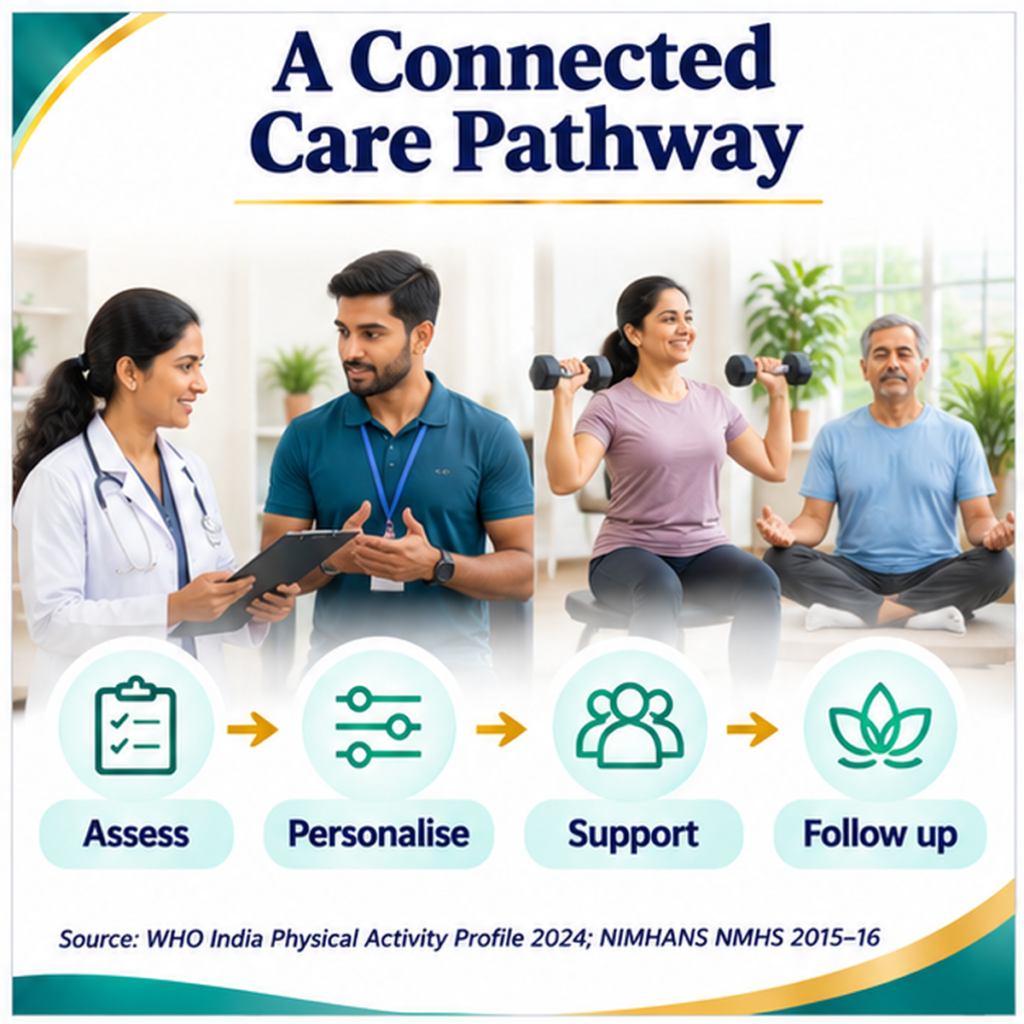
Therefore, assessment for mental health problems and appropriate physical rehabilitation with monitored referral to best supervised fitness activities as necessary would form part of a true health care system.
Someone who suffers from chronic pain and is depressed will need an assessment with appropriate management from a psychiatrist as well as from a physiotherapist and treating physicians and other health care providers as necessary.
A complete health care system would include assessment for mental health problems and appropriate physical rehabilitation and monitored reference to supervised fitness activities as necessary. Activity recommendations should be suitable and safe for patients and of maximum therapeutic benefit.
6. Prevention Should Become a Long-Term Healthcare Priority
Global standards for prevention have to be adopted by all health care systems across the world. These have to be adapted to the individual’s health status and clinical condition.
This can be tailored according to the health of the individual and their medical conditions.
Promote physical activity participation in health care beyond selling gym memberships for physical activity participation in health care.
Create environments that are conducive to physical activity, design recreational spaces that are easily accessible, design workplaces that promote physical activity and develop community-based programs that promote physical activity in general.
Also, the doctor should recommend physical activity and check if the patient is doing what the doctor recommended.
People suffering from mental health problems also require access to the same kinds of fitness programs that people with physical health problems do. Some symptoms can affect how a person works, how they interact with other people, and how they deal with everyday life.
Conclusion
Physical inactivity and mental healthcare need a coordinated public health response in India.
In the long run, therefore, programs promoting physical activity for the prevention and/or treatment of mental health problems, as well as mental health care programs in general, have great potential in meeting the numerous, as yet, unmet needs in these two health care areas. As a factor that can influence an individual’s psychological functioning and health care in general, promoting physical activity for mental health and well-being in health care in the future can be a useful strategy.
An important distinction to make is between promoting physical activity for the prevention and/or treatment of mental health problems and actually treating someone with a psychiatric illness.
Healthcare in India for future generations should enable individuals to develop adequate physical ability and psychological well-being and there is considerable evidence to suggest that physical activity can help to achieve these health dimensions.