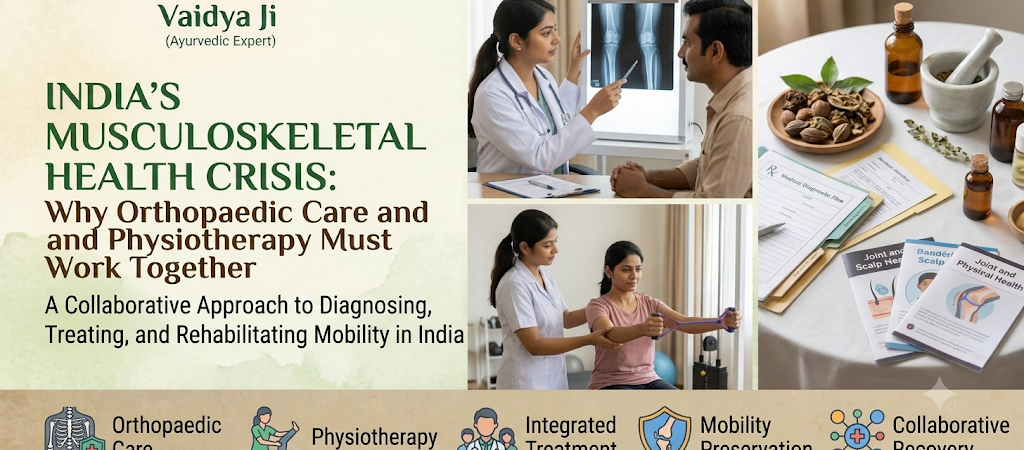
There is growing concern within India’s healthcare system regarding the increasing prevalence of joint disorders, chronic pain, and disability caused by musculoskeletal injuries. Significant advancements have been made in joint replacement surgery, fracture management, and minimally invasive orthopedic procedures. Consulting an experienced Orthopedic Doctor in Noida can help individuals understand their treatment options and receive appropriate care for bone, joint, and musculoskeletal conditions. However, effective orthopedic healthcare must extend beyond surgical interventions to include rehabilitation, preventive measures, and long-term management strategies that support mobility, functional recovery, and overall quality of life.
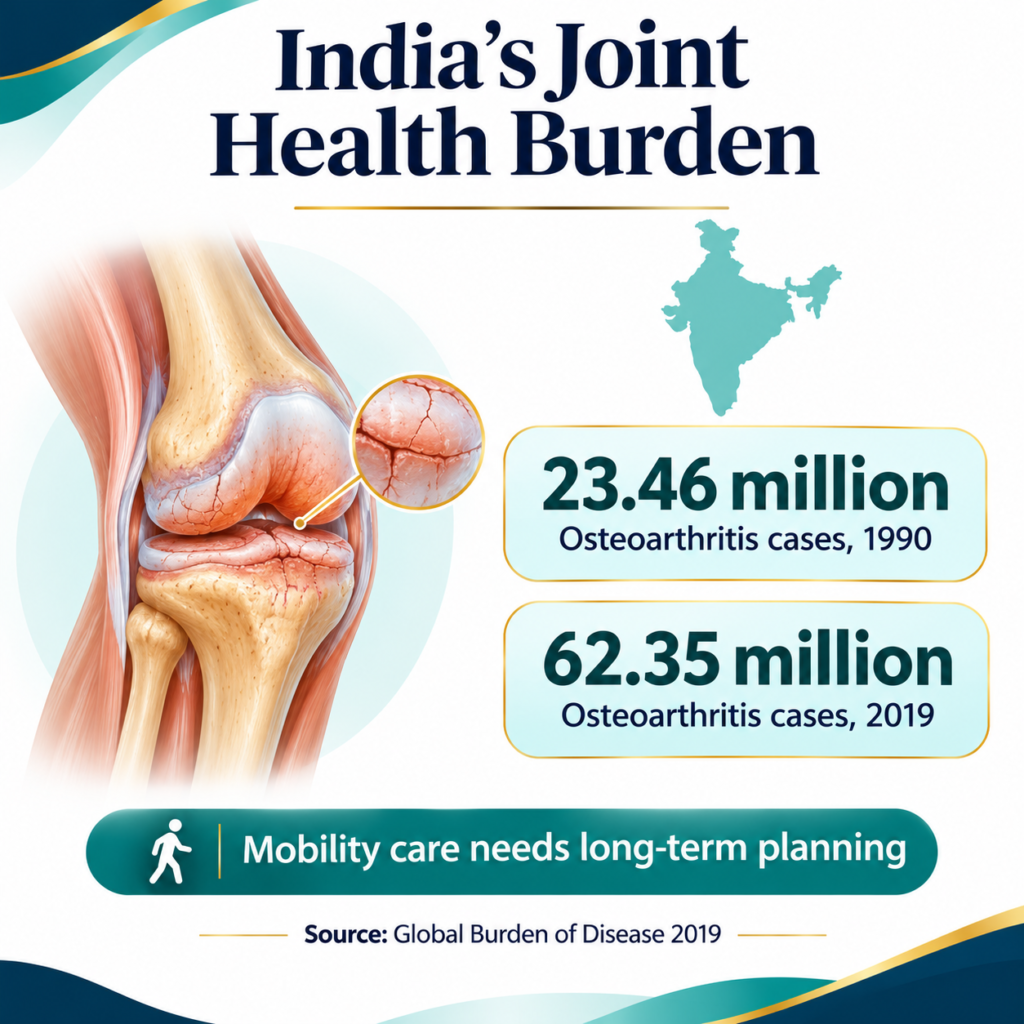
The Global Burden of Disease (GDB) analysis published in the journal Osteoarthritis and Cartilage estimates the number of people with osteoarthritis in India in 2019 to be 62.35 million. This is more than two and a half times the number in 1990 (23.46 million).
Beyond pain in joints, reduced mobility due to musculoskeletal conditions can even have an effect on work, on self-sufficiency, on physical activity and on all aspects of life. Hence, treating only the procedure for an orthopedic condition is not sufficient.
Statistics around road safety in India further reinforce the need for rehabilitation programs and services offering Physiotherapy in Bayswater. According to the Ministry of Road Transport and Highways, the number of people injured in road accidents across the country in 2024 reached 471,441. Of course, the aforementioned statistics would include a host of injuries and trauma outside of the musculoskeletal system; however, there can be no denying the massive pressure that such statistics will put on the country’s health care system.
While many countries now offer rehabilitation services of high standard (such as exercise, movement and functional recovery by Physiotherapy in Bayswater, for example), India has much scope for developing and making available adequate and coordinated services of both orthopaedic medical care and rehabilitation throughout its health care delivery systems.
1. India’s Musculoskeletal Disease Burden Is Growing
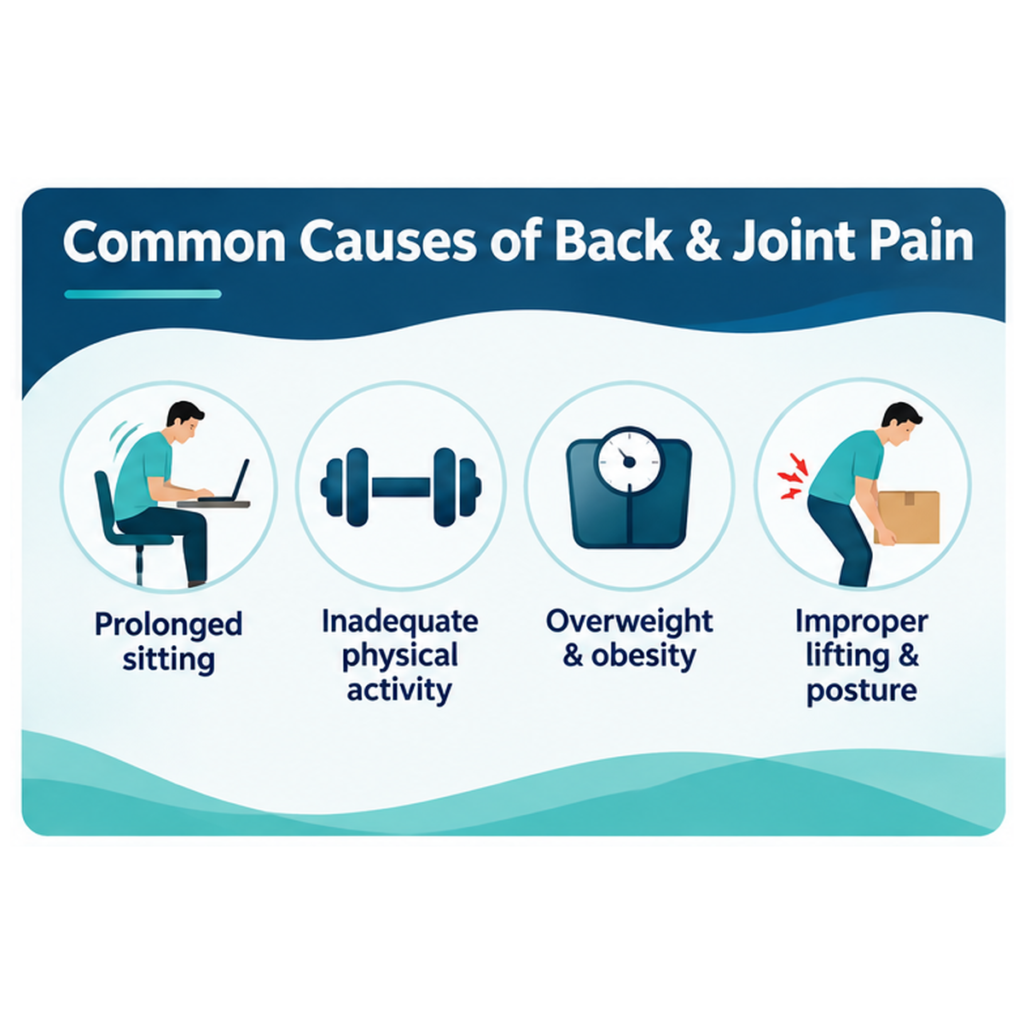
Musculoskeletal conditions are a major cause of pain and disability in India.
The Global Burden of Disease study estimated that the number of disability-adjusted life years (DALYs) caused by osteoarthritis (OA) increased from 0.79 million in 1990 to 2.12 million in 2019.
Knee osteoarthritis is the most common form of osteoarthritis and contributes the largest share of the national osteoarthritis burden, followed by hand osteoarthritis.
The prevalence and associated disability of osteoarthritis were found to be higher in women than men in the study.
Another study done in India by the Community Oriented Programme for Control of Rheumatic Diseases published in 2025 reported a 16.14% prevalence of musculoskeletal pain in the studied communities.
For the rural communities studied, the prevalence of musculoskeletal pain was 20%, whereas in urban communities it was 10.3%.
The prevalence figures obtained from this study are not intended to be used for estimating the national prevalence as the participants were selected in a non-random manner.
Despite these limitations, the data emphasize the need for musculoskeletal healthcare prevention, early diagnosis, and treatment.
2. Surgery Alone Cannot Address Long-Term Mobility Needs
Orthopaedic surgery has an important role in treating fractures, advanced joint deterioration, ligament injuries and selected structural abnormalities.
Joint replacement can improve pain and function in selected cases of severe osteoarthritis.
However, not every musculoskeletal condition needs to go into surgery.
For a variety of musculoskeletal conditions, non-surgical management with therapeutic exercise, weight reduction, patient education and activity modification, with appropriate pharmacotherapy where indicated, is often sufficient to bring about improvement in symptoms and function.
All clinical decisions regarding treatment should consider the severity of symptoms and the degree of structural damage, as well as the patient’s functional limitations and preferences.
Even where surgery is indicated for an orthopedic condition, recovery from that surgery extends well beyond the date of surgery.
The recovery from orthopaedic surgery can take a while to complete. Patients who have had surgery for knee problems can need strengthening, mobility, and re-education of activities to return to full function.
Measuring the success of orthopaedic treatment is not just the healing of the tissue that was operated on but also the patient’s return to functional movement and activities of daily living.
3. Physiotherapy Is Essential to Functional Rehabilitation
Physiotherapy is essential to helping patients return to full movement, strength, and confidence in activities.
Progressive resistance exercises, balance training, joint range, and specific task-related movements can be used to help patients recover movement, strength, and confidence to return to activities.
Physical therapy in the form of progressive resistance, balance training, joint mobility and more specific tasks can aid in the recovery of patients who have had knee surgery, for example, to increase strength for walking as well as to restore activities necessary for independent functioning.
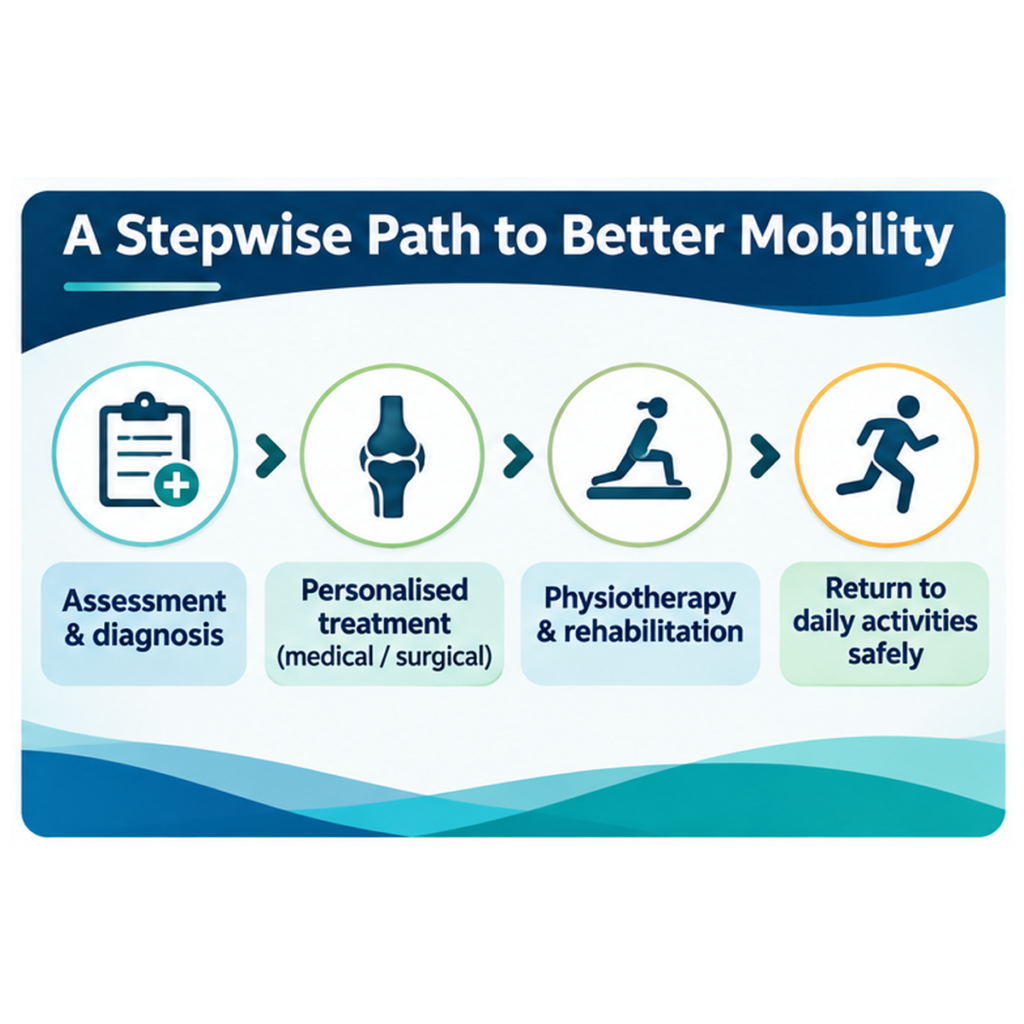
Patients with chronic lower back pain are likely to benefit from education, structured exercise, and self-management strategies in the treatment of their symptoms.
The World Health Organization’s 2023 guideline for chronic primary low back pain is a person-centered approach that includes education, exercise programs, and selected physical therapies.
However, treatment should be individualised.
All patients with chronic low back pain require manual therapy. Most passive treatments can be substituted with active rehabilitation programs.
There is a need to strive for meaningful function and symptom control in the clinical management of patients with musculoskeletal disorders.
4. Injury Rehabilitation Requires Better Coordination
Statistics of road accidents are important for estimating trauma care needs of the country.
According to Ministry of Road Transport and Highways, Government of India, 487,707 road accidents occurred and 471,441 injured in 2024.
This data on road accidents is not equivalent to the incidence of orthopaedic injuries, but it gives a perspective of the trauma care required for the injured.
Patients with orthopaedic injuries such as fractures, sprain/strain of ligaments, and major joint injuries would need support to function optimally over a period of weeks to even months.
Rehabilitation programmes should incorporate parameters which take into account tissue repair, weight bearing, pain, strength and functional goals.
Good communication between an Orthopaedic Surgeon and Physiotherapist is especially important after surgery.
Clear rehabilitation protocols enable patients’ exercises to progress in line with the patients’ clinical state and the respective surgical measures.
Without a coordinated follow-up of the patient, problems of return to work, to sports or daily activities can arise that are avoidable.
5. Early Intervention Can Reduce Functional Decline
Musculoskeletal problems frequently develop gradually.
As these conditions are often developing slowly, they can initially be perceived as only slightly troublesome but can soon start to affect activities of daily living.
Early identification of underlying conditions enables their appropriate treatment.
For the case of osteoarthritis, management of symptoms with due consideration to measures for maintaining physical activity, strengthening muscles, and controlling modifiable risk factors is important.
For sports injuries rehabilitation must focus on restoring the correct movement, strength and control and allow return to activity in full.
Prevention also has to focus on ergonomics in the workplace, promoting physical activity and preventing injuries.
It is important to recognize that preventive healthcare is also about avoiding unnecessary investigations and treatment.
The clinical examination, coupled with the appropriate use of investigations, is at the heart of responsible and high-quality healthcare provision.
6. India’s Next Priority Is Integrated Musculoskeletal Healthcare
India’s orthopaedic healthcare development should move on to a model of integrated healthcare in which primary healthcare, orthopaedic specialists, physiotherapists and rehabilitation services are coordinated and provided in a timely, need-based and appropriate manner to patients.
Patients should receive timely, appropriate treatment and appropriate follow-up to ensure that they can function optimally in daily life.
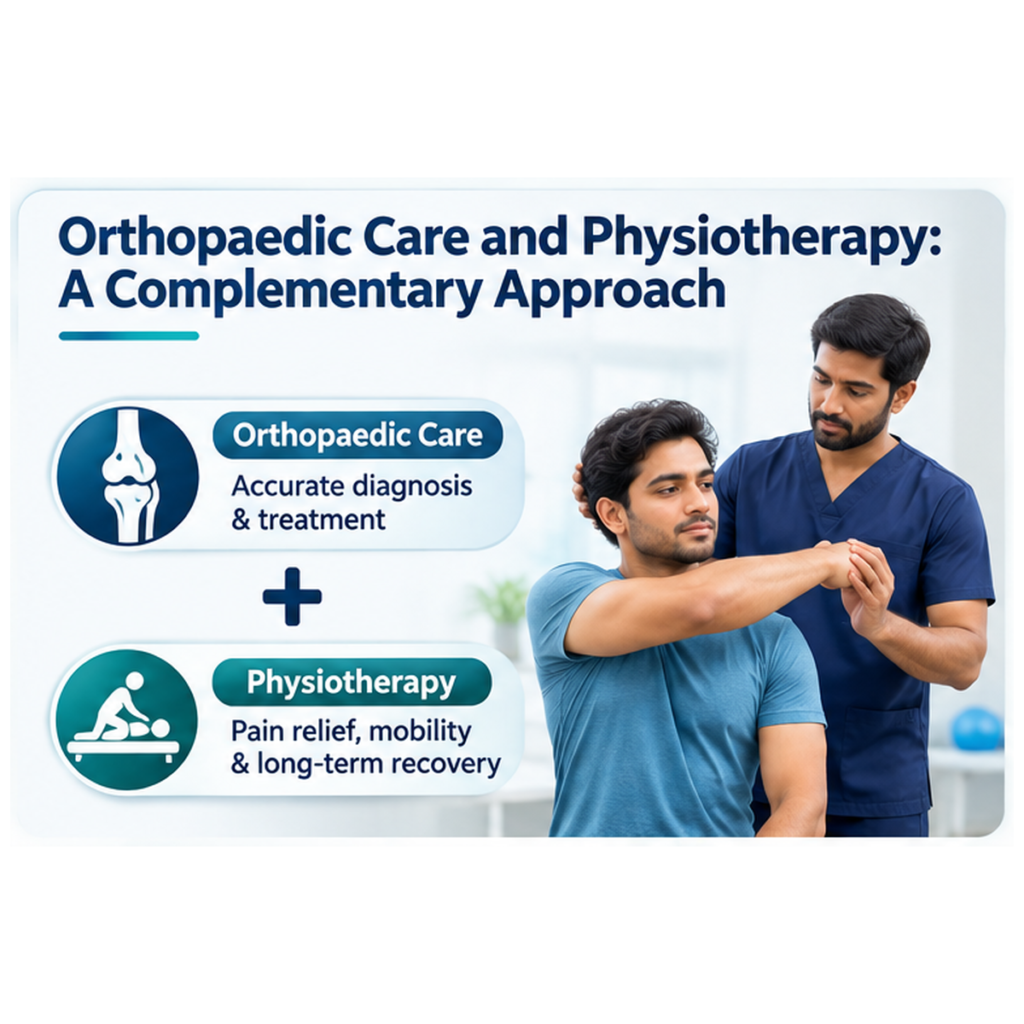
Such coordination will help in continuous care of the patient post-surgery and in managing musculoskeletal care on a non-surgical plane wherever indicated.
Healthcare outcomes can be measured in terms of patients’ pain, their ability to move, their strength, their level of independence, and their ability to return to meaningful activities.
Digital consultations and remote exercise monitoring could be considered for some patients, but clearly there are scenarios where a formal clinical assessment is required, and hands-on rehabilitation is required.
Strengthening rehabilitation programs, to make sure that the advances in orthopaedic surgery are complemented by patients’ active participation in their recovery from the treatment.
Conclusion
The growing burden of musculoskeletal diseases in India will not be addressed by merely increasing the number of orthopedic surgeries.
A substantial burden of osteoarthritis and other musculoskeletal conditions in the community and healthcare system exists due to injuries.
Thus, progress in treating musculoskeletal disorders in India needs to be a combination of appropriate medical care and rehabilitation with a focus on preventive and ongoing care.
India’s next milestone in musculoskeletal healthcare should be the extent to which it enables its patients to regain maximum mobility and achieve independence and good quality of life after having been treated for their various musculoskeletal conditions.