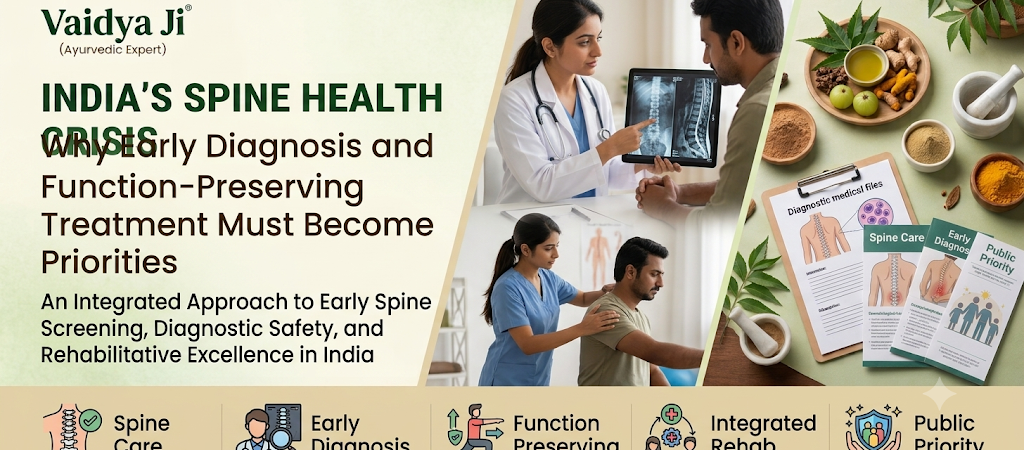
While there have been recent advancements in the field of minimally invasive spine surgery, advanced neuroimaging, and spinal rehabilitation, a major challenge that India’s healthcare faces today is that of back pain, spinal degeneration, and associated nerve problems affecting people’s mobility to carry out everyday activities. However, the greatest opportunity for the healthcare system lies in early identification of problems and avoiding unnecessary interventions under the care of a skilled Neurosurgeon in Noida.
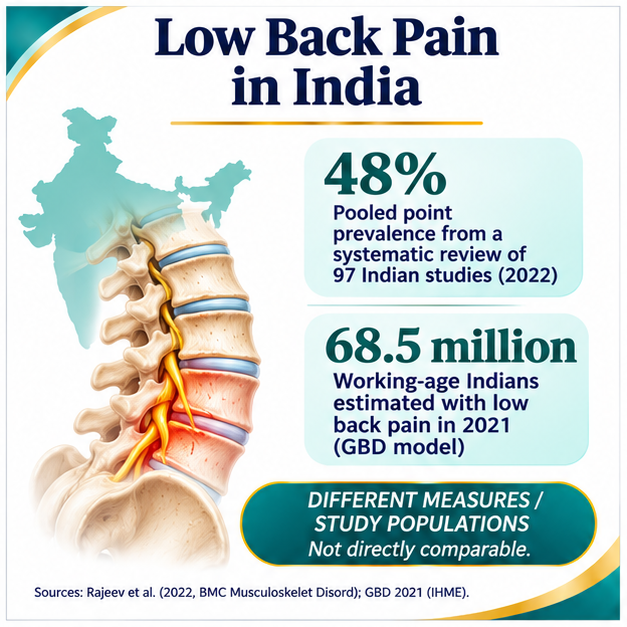
A systematic review and meta-analysis was carried out in 97 studies conducted in India to determine the pooled point, annual, and lifetime prevalence of low back pain.
It is also important to note that there was considerable variation in the study designs and methods that were used to calculate the prevalence of spinal pain in the included Indian studies. Therefore, the figures that have been presented here for comparison only highlight the magnitude of the problem of spinal pain in different populations and settings within India.
An even larger number, 68.5 million prevalent cases of low back pain in the working-age population (15–64 years) across India, was estimated by Global Burden of Disease 2021. The focus on musculoskeletal disability in economically productive years of life is critical.
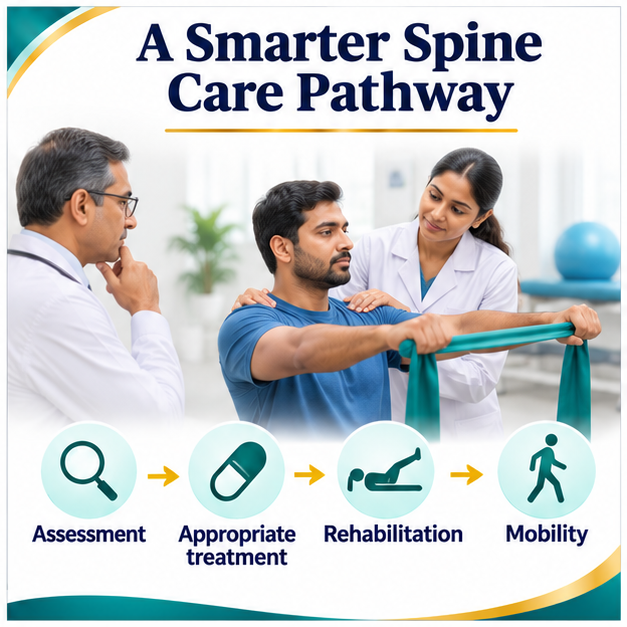
A Spine Specialist in Chennai would assess a patient for conditions such as disc disorders, spinal stenosis, nerve compression, etc. A healthcare system in India to serve the growing Back Pain Burden should be designed to first assess a patient in a specialty clinic for spinal conditions and then offer appropriate non-surgical treatment options followed by appropriate surgery and rehabilitation.
1. India’s Back Pain Burden Is a Public Health Concern
Low back pain is not just an age-related condition. It affects people of all ages, including working adults, the elderly, and people who work in physically demanding jobs.
The study examined the clinical profile of 16,866 patients with low back pain in 76 private healthcare centers of 18 states of India, in the year 2025.
Women formed 67.7% of the study population, and 61.2% of the total patients studied were overweight or obese.
The data provided in the tables are those of the patients studied, not the prevalence of low back pain in women or of individuals with excess weight in India.
While the study’s findings are not indicative of the prevalence of low back pain in women or of people with excess weight, these are characteristics of the patients studied that need to be taken into account when assessing and managing patients presenting with low back pain in clinical practice.
Additionally, the Global Burden of Disease database reports the age-standardized rate of incidence of low back pain in India to be approximately 2,816/100,000 in 2021.
Physical activity, exposure to work and other environmental factors, as well as access to healthcare throughout the course of the disease, all need to be improved in order to achieve better outcomes for spinal disorders.
2. Not Every Back Pain Patient Needs Surgery
The misconception that spinal disorders always require surgery is a widespread one.
Most cases of uncomplicated low back pain are managed without surgery.
Chronic primary low back pain in adults with uncomplicated low back pain should be managed using a person-centred approach as outlined in the World Health Organization’s 2023 guideline for chronic conditions (approaching treatment from an education, exercise, physical and/or psychological perspective).
However, treatment must be individualised.
Disc degeneration demonstrated on images of the spine does not necessarily mean that corresponding symptoms are explained by the findings. A disc bulge does not automatically have to be treated with surgery.
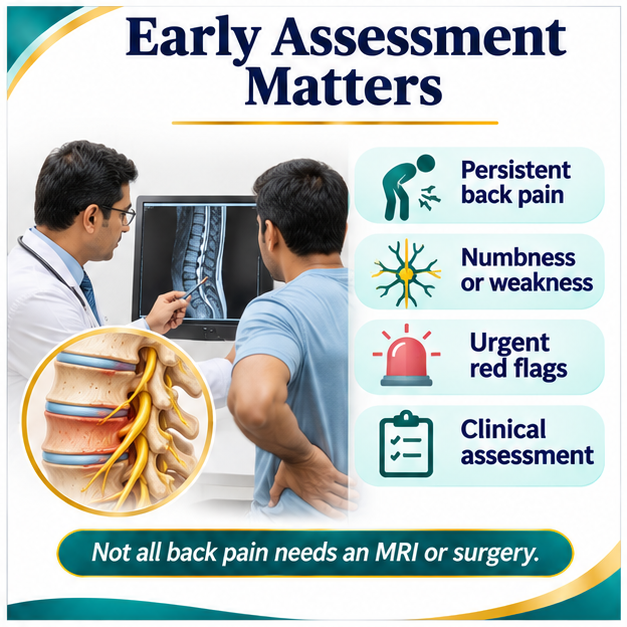
Therefore, the clinical evaluation of the patient with spinal disorder should focus on the specific characteristics of the pain, presence of neurological deficits, degree of functional impairment, and presence of serious disease.
Identify the cause of the symptoms before choosing treatment.
Spine care that results in improvement of function of a patient is better than more surgery.
3. Spinal Nerve Compression Requires Timely Assessment
Certain spinal conditions require more specialised investigation.
A herniated disc can compress or irritate a nerve root, causing pain that travels down into the arms or legs and can be described as tingling, numbness, or weakness.
Spinal canal stenosis, which is responsible for walking-related symptoms and a decrease in mobility, in particular in the elderly population.
However, the same set of symptoms can be caused by different medical conditions.
MRI and other investigations can be used as required for diagnosis but must be interpreted in light of clinical findings.
The National Institute for Health and Care Excellence states no imaging for uncomplicated low back pain in non-specialist settings (to change management would be to image).
Imaging would be more appropriate if it could change your management of a patient’s presentation, or if you suspect serious pathology.
New onset of bladder or bowel dysfunction, saddle area numbness or severe progressive weakness are red flag symptoms for serious neurological compression and require urgent assessment.
4. Spinal Injuries Add Another Dimension to India’s Healthcare Burden
India’s spinal healthcare requirements extend beyond degenerative disorders.
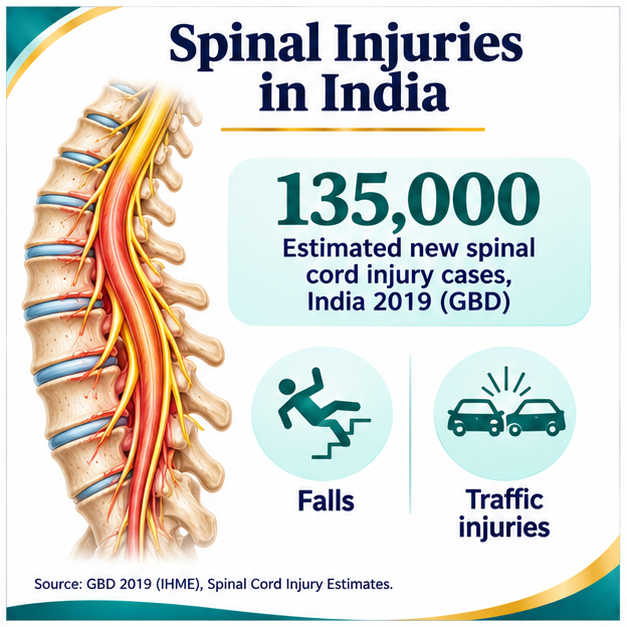
Approximately 135,000 new spinal cord injury cases occur in India every year (India State-Level Disease Burden Initiative, 2019).
These are modelled estimates, so should not be confused with the number of cases that have presented to hospital, or indeed the number of cases that have presented for surgical review.
A hospital-based study from Uttarakhand (the study was conducted in a medical college in Uttarakhand) analyzed 167 cases of traumatic spinal cord injuries (fixed cases) from 2018 to 2021.
Falls were the most common cause of injury in 59.3% of cases, followed by road traffic accidents in 35.9% of cases.
The findings of the study are specific to the studied population and thus need to be viewed within the context of accident prevention and trauma care.
Injuries to the spinal cord can need emergency care to stabilize the injured part of the spine, a surgical assessment to determine if any surgery is required, a rehabilitation program, and on going support.
In particular, patients with spinal cord injuries with neurological deficits or with suspected spinal column instability need to be evaluated as quickly as possible.
5. Minimally Invasive Spine Surgery Has a Defined Role
Spine surgery is evolving in the direction of minimally invasive procedures using small skin incisions, specifically designed instruments, and adequate magnification.
Depending on the condition, selected patients will benefit from a minimally invasive decompression or from another corresponding surgical intervention.
The term “minimally invasive” does not automatically equal “risk-free” or “best”.
Decisions regarding spinal decompression surgery take into account the diagnosis, the neurological deficit, spinal stability, and how the condition has responded to conservative management.
International clinical guidance indicates that spinal decompression may be considered for selected patients with sciatica, when non-surgical treatment of pain and function has failed, and imaging findings correspond with symptoms.
Patients need to know about the possible complications of any spinal treatment as well as the amount of time and effort involved in their recovery and how much improvement they can expect from their symptoms.
The best treatment for any clinical problem is one that offers an acceptable risk/benefit ratio for the patient’s particular clinical problem.
6. Rehabilitation Should Be Central to Spine Healthcare
Spinal treatment does not end with symptom relief or surgery.
Rehabilitation can aid in the patient’s return to full strength, enable full mobility, and help them return to full activities.
Depending on the diagnosis above, programs can consist of progressive exercises, movement re-education, patient education about their condition, and strategies to live with chronic pain.
Postoperatively, rehabilitation should be conducted bearing in mind the patient’s symptoms, the treating surgeon’s instructions, and individual recovery needs.
Even when treated without surgery, it is important that patients with spine problems maintain an appropriate level of physical activity and endeavor to regain function and reduce their ‘fear of movement’ through appropriate rehabilitation.
This integrated healthcare model for managing the spine health of the Indian populace should consist of primary care, back care specialists, physiotherapists, and a network of spine rehabilitation professionals.
By making connections between primary care, Spine Care, physiotherapy, and Rehabilitation, a healthcare system can ensure a better continuum of care and enable patients to make an informed decision.
Conclusion
The growing Spine Health Care burden in India needs to be addressed beyond performing more surgeries.
There is ample evidence of the prevalence of low back pain and spinal injuries, and levels of neurological disability in various populations.
Early assessment, appropriate investigations, evidence-based management, including treatment and rehabilitation, in a setting of integrated healthcare are critical for control of the growing spine healthcare burden in India.
The next milestone for spinal health care in India should not be to add more procedures to the surgeon’s armamentarium but to help patients preserve their mobility and avoid interventions that are not necessary in the first place. Treatment needs to be timely and appropriate.