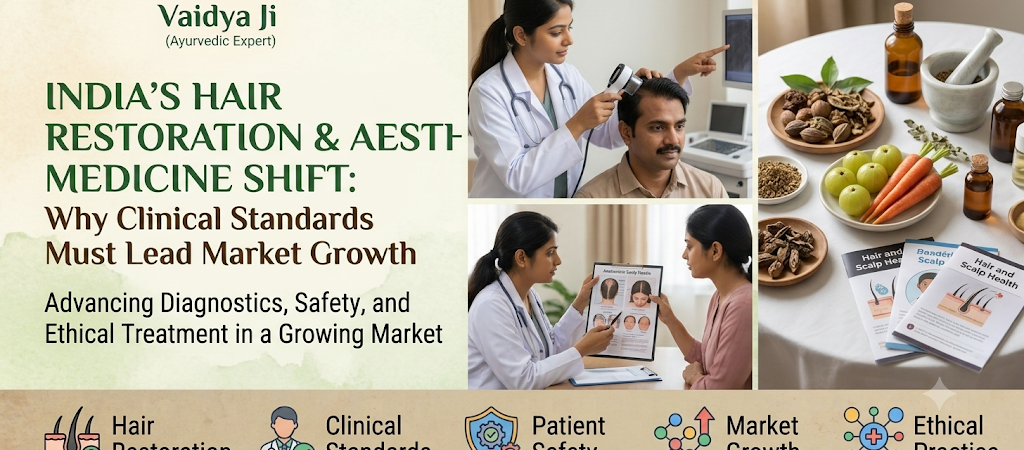
To deliver effective hair loss treatments, hair restoration clinics in India are continuously evolving, with advancements in hair transplantation techniques, non-surgical therapies, and diagnostic methods. As the number of available treatment options increases, it becomes essential to ensure that improvements in hair loss diagnosis and patient safety keep pace with these developments. A Hair Transplant in Mumbai can play a role in addressing these concerns by offering appropriate hair and scalp assessments and treatment options based on individual needs. However, the growing availability of hair restoration procedures must be accompanied by accurate diagnosis, evidence-based treatment planning, and adherence to established safety standards to support effective and sustainable outcomes.
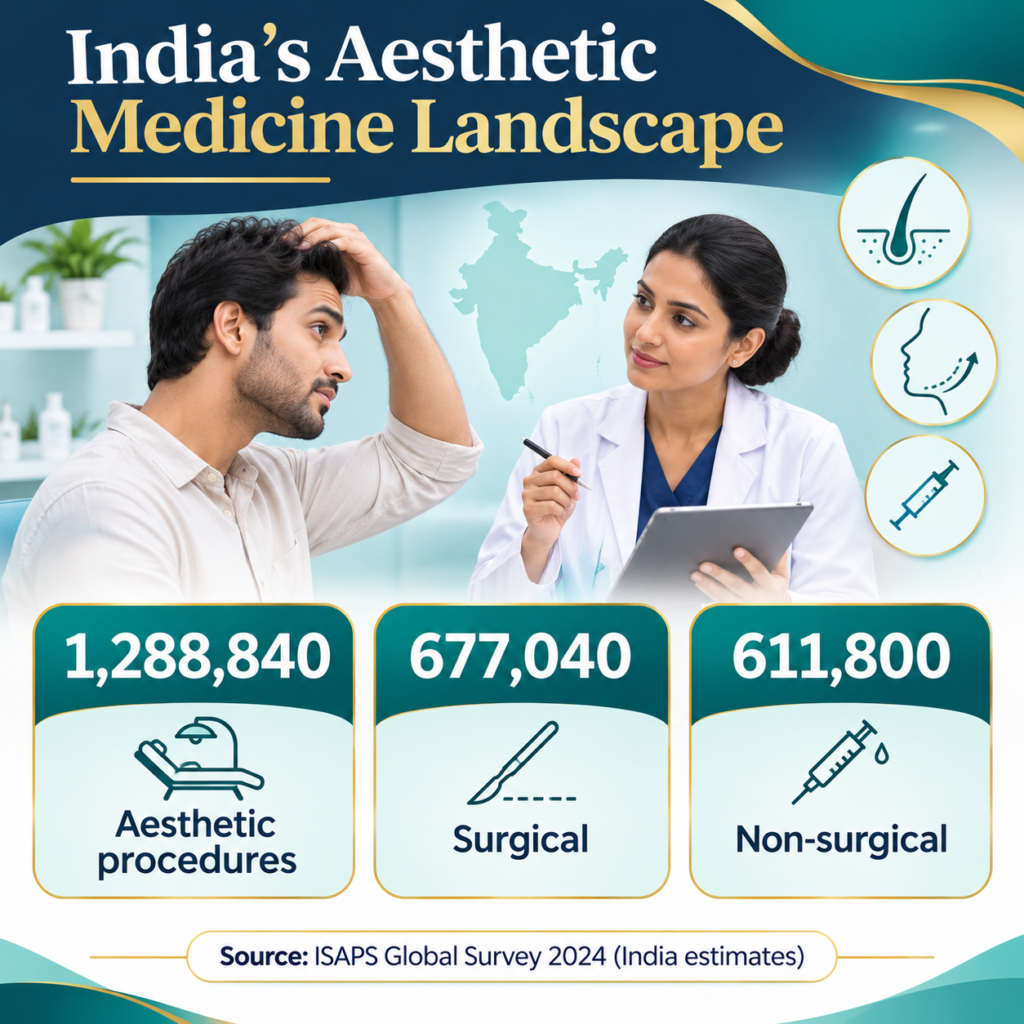
Aesthetic procedures in India have witnessed phenomenal growth, reaching 1.29 million (surgical – 677,040 and non-surgical – 611,800) procedures in 2024, thus ranking seventh globally in the ISAPS survey for the same year.
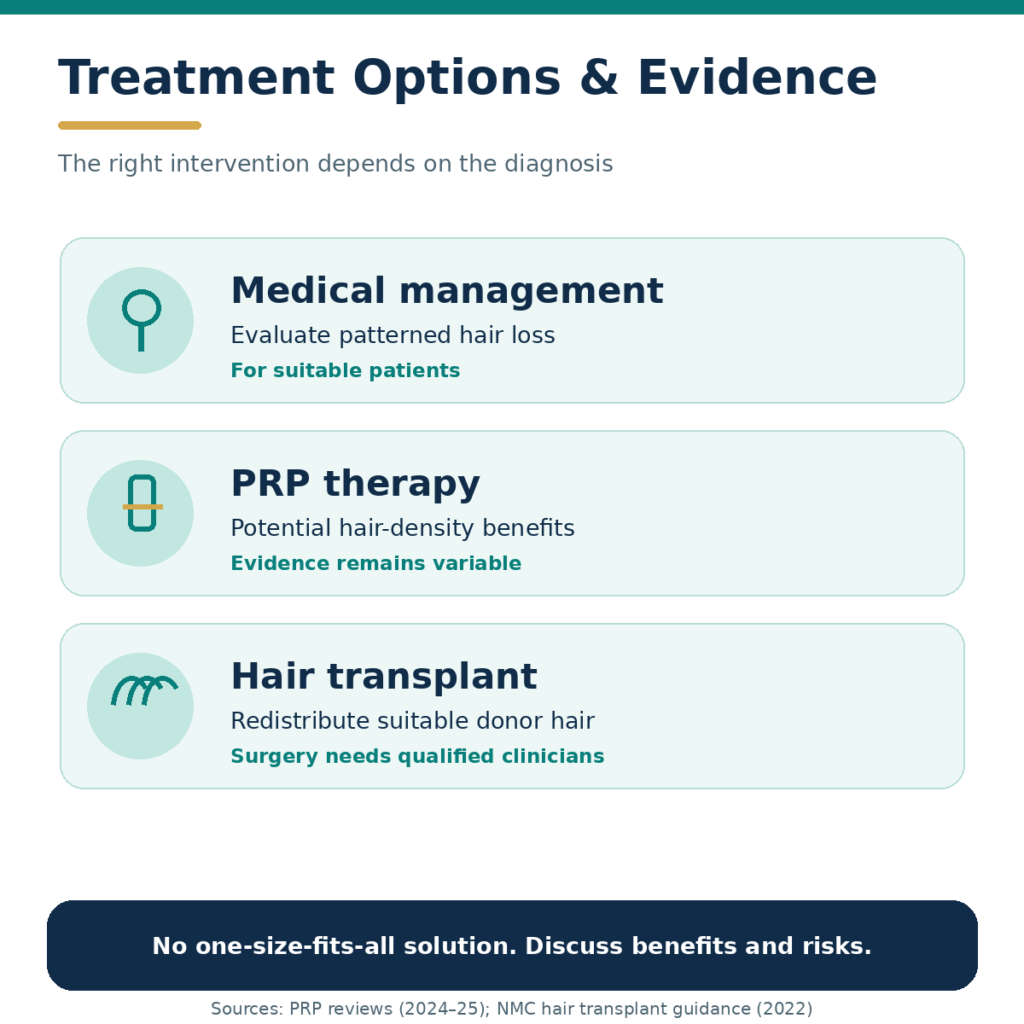
It is known that male pattern hair loss affects the majority of men in India. A population-based study conducted in Bengaluru to determine the prevalence of androgenetic alopecia found that androgenetic alopecia was present in 58% of the 1005 men studied. All the men in the study were 30 – 49 years of age. The findings of this study cannot be applied to the entire male population of India.
The changing landscape of the healthcare industry means patients are increasingly able to look for medical solutions for hair loss in the form of non-invasive treatments, as well as hair restoration using hair transplantation, as well as other aesthetics such as dermal fillers and laser treatments for skin, to name a few, to assist with general appearance and to look healthy and youthful.
Urban India is witnessing rapid growth in aesthetic treatments offered by dermatology clinics and hair transplant centers, ranging from hair care and hair loss treatments to non-surgical skin rejuvenation and advanced facial procedures. Clinics such as Dr. Sculpt Clinic are part of this expanding aesthetic healthcare landscape, where patients have access to a wider range of cosmetic and restorative treatments. However, as the availability of these procedures increases, there is a growing need to prioritize patient safety, accurate diagnosis, appropriate counseling, and evidence-based treatment protocols. Maintaining consistent clinical standards and ethical practices is essential to ensuring safe procedures, realistic expectations, and better long-term patient outcomes.
1. India’s Aesthetic Procedure Market Has Reached Significant Scale
The ISAPS Global Survey 2024 estimated 611,800 non-surgical aesthetic procedures in India.
Hair removal is by far the most common aesthetic procedure in the country, constituting 208,880 procedures, followed by hyaluronic acid fillers at 97,160, chemical peels at 85,120, and botulinum toxin procedures at 76,720.
However, the vast majority of these procedures are not surgical in nature. Hence, it is essential to evaluate the growth of aesthetic healthcare in India in terms of the clinical efficacy and safety of the vast array of treatments being provided to patients.
However, the survey does not amount to a complete census of all Dermatology clinics, all Hair Transplant centers, and all other Aesthetic service providers in India.
This distinction matters when interpreting industry growth.
Procedure numbers do not reflect adequate health care delivery, even when large numbers of treatments are performed.
These numbers are important to measure the development of aesthetic healthcare in India in terms of clinical outcome and not only in terms of demand for treatments.
2. Hair Loss Management Must Begin With an Accurate Diagnosis
Hair loss is not a single medical condition.
This is to highlight that different forms of hair loss are caused by different mechanisms and therefore need to be treated differently.
A Bengaluru population-based study found that of all the causes of hair loss in men, androgenetic alopecia accounted for 47.5% of hair loss in men aged 30–35 years, and this increased to 73.2% in men aged 41–45 years.
Also notable in this study is the growing prevalence of male pattern hair loss with increasing age of the population studied.
However, not everyone experiencing thinning hair requires transplantation.
A complete clinical assessment of hair loss includes an inspection of the scalp, assessment of hair loss patterns, a medical history, and investigation for underlying diseases as needed.
Those experiencing thinning hair and whose hair loss is potentially reversible due to a medical condition or other reason should first receive appropriate medical treatment instead of surgery.
The first quality measurement in hair restoration should be the diagnostic accuracy and not the number of hair follicle grafts moved from one location to another.
3. Hair Transplantation Requires Stronger Surgical Safety Standards
Hair transplantation is carried out using techniques such as FUE (Follicular Unit Extraction) and FUT (Follicular Unit Transplantation). Hair follicles are redistributed from donor hair-bearing areas to balding areas using these techniques.
Suitable patients can now be offered hair restoration by transfer of hair follicles from donor sites to balding areas of the scalp using a variety of different techniques.
However, transplantation remains a surgical intervention.
In September 2022, the National Medical Commission of India defined hair transplant surgeries (scalp incisions, hair follicle harvest, recipient sites, etc.) as surgeries that require a qualified and licensed doctor to perform them.
Also, guidelines for hair transplantation were issued by the Ministry of Health in order to prevent such procedures by unqualified doctors.
In December 2025, the Ministry of Health and Family Welfare (MoHFW), Government of India has reiterated the same guidelines in the Parliament in the year 2025 for addressing issues related to regulation of Aesthetic Dermatology / Laser Treatments.
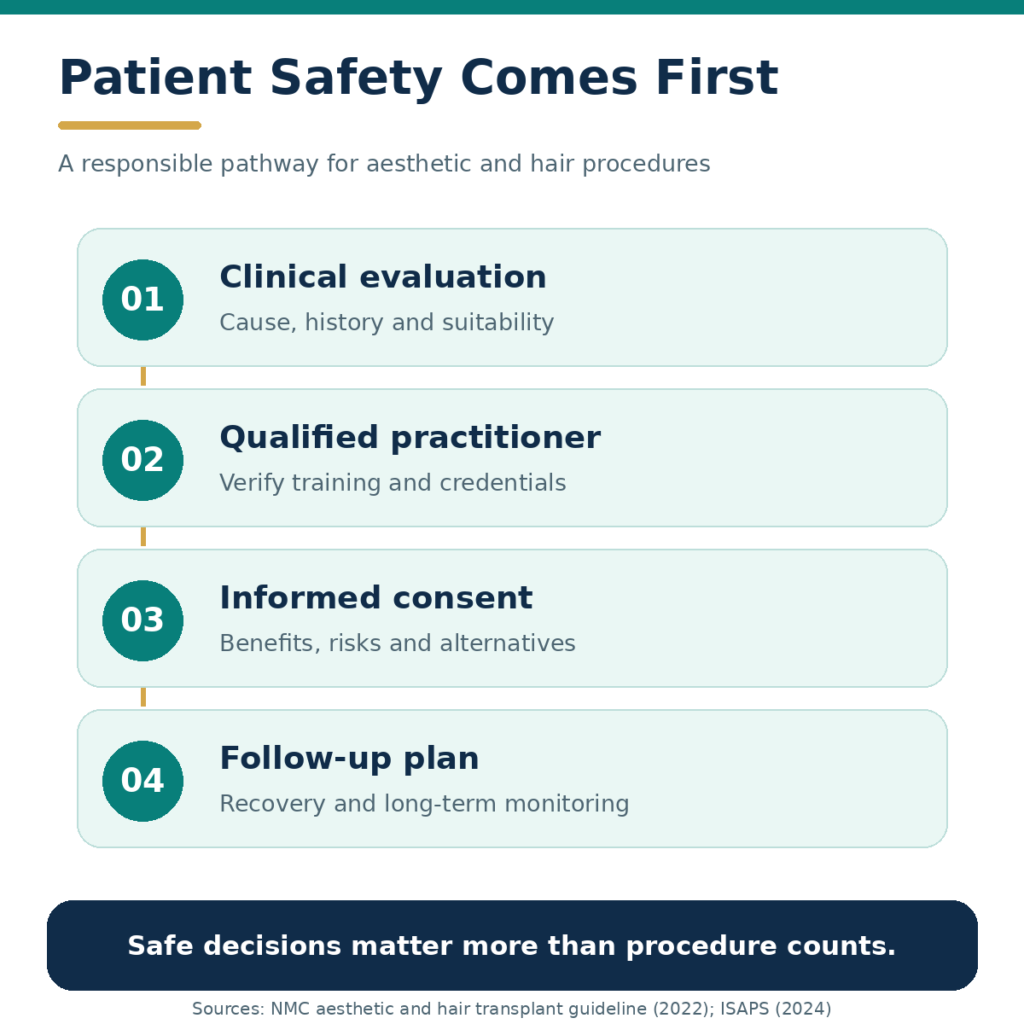
In terms of safety for hair transplantation of patients, it is very important to check the qualifications of a hair transplant doctor, to use sterilized equipment and hair follicles, to properly assess the donor site, to have proper informed consent, and to follow up patients properly after hair transplant surgery.
Even hair loss in untreated areas has to be taken into account when planning a hair transplant.
4. Regenerative Hair Treatments Require Evidence-Based Evaluation
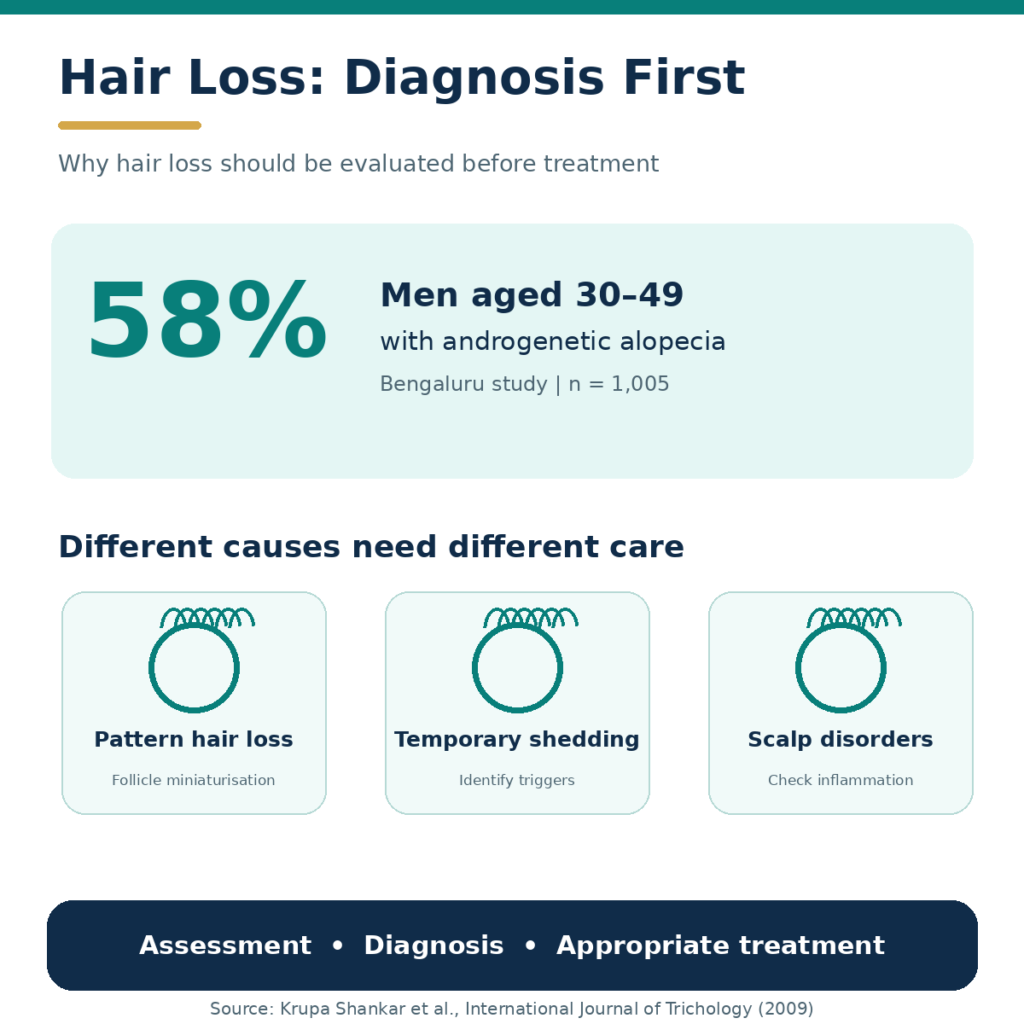
These non-surgical hair restoration methods have gained increasing attention in the hair restoration field and have been widely used in clinical practice.
The systematic review and meta-analysis investigated 43 RCTs with 1,877 participants. There was moderate evidence that specific PRP preparations increase hair density.
However, differences in the preparation methods, treatment protocols, and study quality make a direct comparison of the individual interventions difficult.
In a later systematic review from 2024, potential benefits of non-surgical hair restoration were described; however, the need for stronger evidence was underlined.
Newer regenerative interventions such as exosome-based hair restoration require scrutiny of the existing clinical evidence and its translation into clinically practical, safe and effective hair restoration treatments.
It is very important to explain to patients the degree of benefit of a new treatment as well as the unknowns, potential harms and alternative treatments.
The best treatment for any condition is one that is recommended based on the clinical findings from the diagnosis and not on the basis of whether a new advanced technology is being marketed.
5. Patient Expectations Are Becoming a Clinical Responsibility
Most aesthetic procedures are carried out to fulfill a patient’s personal goals, and thus differ from other medical treatments.
This makes patient communication particularly important.
The way in which hairline design, the overall facial features, skin type, and the recovery time will affect patients’ perception of success after a procedure needs to be clearly communicated to patients.
The number of aesthetic surgical procedures like scar revisions (106,120) and liposuctions (97,160) in India during 2024, as estimated in the ISAPS survey for that year, underlines the growing activity in the field of surgical aesthetic medicine in the country.
As a large volume of aesthetic surgeries is being performed, assessment, surgery itself, and post-operative care of scar revision and liposuction cases need to be of the highest standard.
An Indian surgical review published in 2026 in a notable surgical journal elaborated on the issue of preoperative assessment in aesthetic surgery and the importance of a standardized approach to safety in the perioperative period.
It is therefore very important for healthcare providers to highlight the limitations of aesthetic medicine as much as they highlight its benefits.
Aesthetic medicine is not about promising results; it’s about bringing sensible and realistic expectations to the table for our patients to make the best decision with the information we provide.
6. India’s Next Priority Is Clinically Responsible Growth
Also, there is vast scope for India’s aesthetic healthcare sector to provide dermatological assessment, hair loss treatment, and related restorative surgical care to those in need.
However, strong clinical governance is required for healthy growth of aesthetic healthcare in India.
We must prioritize accurate diagnosis, qualified practitioners, the best possible treatment for the given case, monitoring of possible complications, and the patient’s continued care.
Digital imaging and treatment-planning tools will not replace professional judgment, though they can aid the process of a clinically responsible approach to aesthetic medicine.
It is also important to differentiate between medical treatment that is required and aesthetic treatment that is desired.
An evidence-based approach would be to recommend a suitable treatment or defer a treatment until appropriate; or advise against a treatment for aesthetic purposes when it is not indicated medically.
Conclusion
The Hair restoration and aesthetic medicine sector in India has come a long way in terms of the variety of procedures offered and the number of procedures being performed.
Yet, better technology and higher numbers of procedures do not automatically translate into better results for the patients.
The future of aesthetic medicine in India will depend on connecting clinical expertise with compliance to regulations and patients’ education for appropriate assessment of long-term treatment outcomes.
So long as adequate, safe, high-quality care is delivered to patients and not by the number of procedures carried out, India’s aesthetic medicine future holds great promise to develop and lead the world in this sphere.