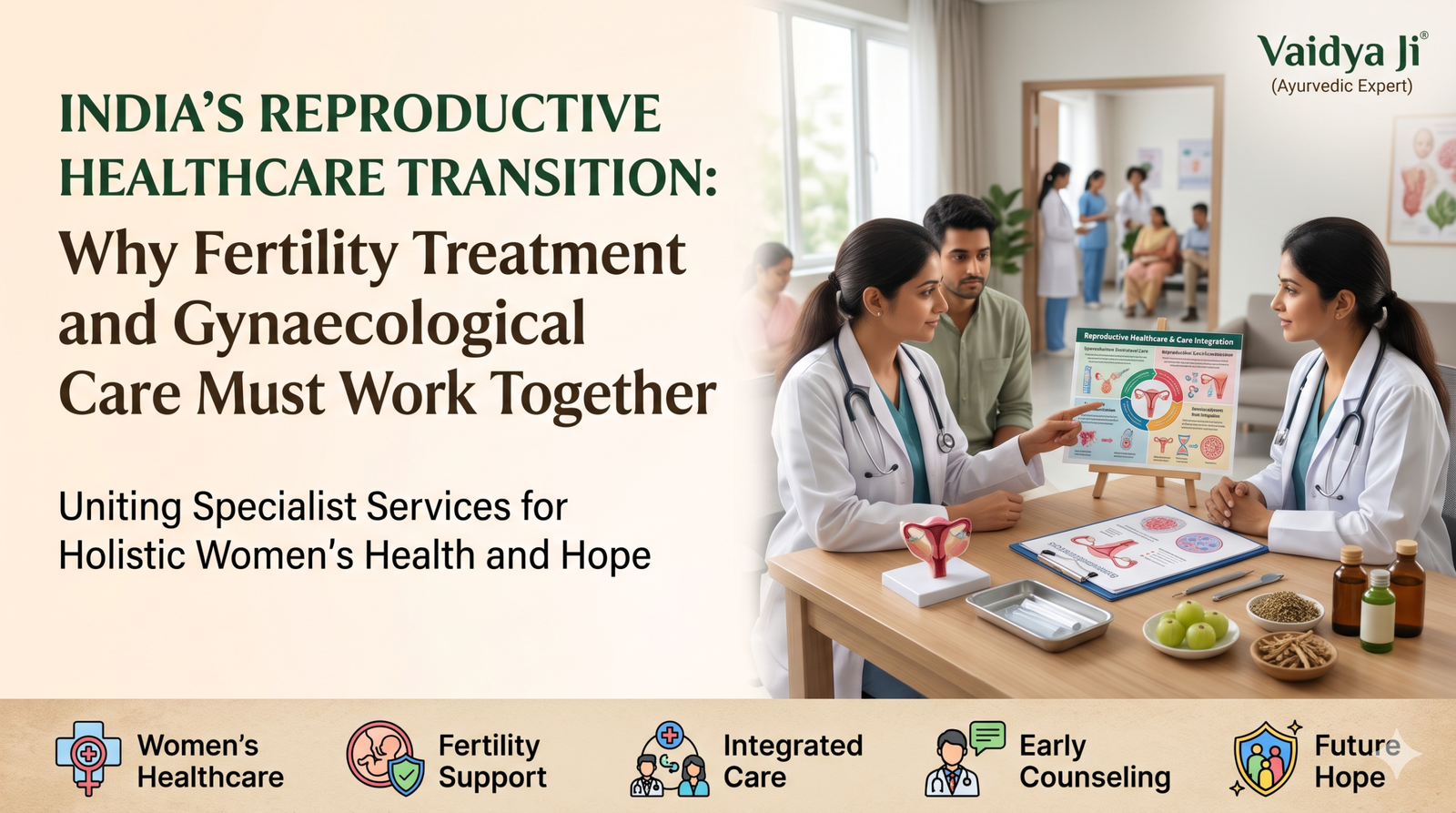
Healthcare for reproductive health is needed on an ongoing basis to treat problems like the woman having irregular menstrual cycles, having PCOS, fibroids etc and thus while she is planning for a pregnancy or is already pregnant, she needs a full reproductive health assessment and proper evaluation to manage any problem and that could become serious and complicated if not treated on time. The individual will need the services of a good Gynecologist in Nerul for her clinical needs.
The National Family Health Survey (NFHS-6) conducted in 2023-2024 was released in May 2026. The Total Fertility Rate (TFR) for India has marginally dropped to 2.0 children per woman. The institutional deliveries have also gone up from 88.6% in NFHS-5 to 90.6% in NFHS-6.
A decrease in births in the whole population does not necessarily mean that all couples can conceive while the population’s fertility is decreasing.
The prevalence of infertility in South Asia was reviewed in a systematic review of studies from India in 2026. The overall estimated prevalence of infertility was 8%, but there was marked variability between individual studies. Therefore, more robust population-based data are required to ascertain the true burden of infertility in the region.
Reproductive healthcare plays an important role in managing ongoing health concerns such as irregular menstrual cycles, polycystic ovary syndrome (PCOS), uterine fibroids, and other gynecological conditions. Consulting specialists at an IVF Centre in Mumbai can help women and couples access appropriate fertility assessments, reproductive health evaluations, and treatment options based on their individual needs. Whether a woman is planning a pregnancy or is already pregnant, a comprehensive reproductive health assessment and proper medical evaluation can help identify underlying conditions, manage existing concerns, and reduce the risk of potential complications. Early diagnosis, timely intervention, and regular monitoring are essential for supporting long-term reproductive health and maternal well-being.
1. India’s Fertility Transition Requires a Broader Healthcare Strategy
India’s fertility patterns have changed considerably.
The TFR has declined from 2.2 in NFHS-4 to 2.0 in NFHS-6, while the Contraceptive Prevalence Rate (CPR) for married women has risen from 66.7% in NFHS-5 to 69.1% in NFHS-6.
Change in Reproductive Behavior, Family Planning and Contraception Use.
The indicators regarding reproductive health do not necessarily correlate with an improved health status of women as the Total Fertility Rate continues to decline in the country.
This can include a range of health problems affecting a woman’s gynecological health as well as her fertility, such as ovulatory disorders, tubal damage, uterine anomalies, and other gynecological health problems. Similarly, several health problems can affect a man’s reproductive health too.
Primary infertility exists in 7% of women and 3% are affected by secondary infertility in South Asia, although with wide confidence intervals.
Thus, assessment of the reproductive health of both male and female partners is necessary to determine the cause of infertility and treat them accordingly.
Thus reproductive healthcare in India can change for better if, instead of rushing into IVF for all the reproductive health problems, we adopt a strategy of early diagnosis and treatment of whatever be the health problem of both husband and wife.
2. PCOS Demonstrates Why Gynaecological and Fertility Care Must Be Connected.
Women with Polycystic Ovary Syndrome (PCOS) also need healthcare for reproductive and other health problems.
A recent nationwide study published in JAMA Network Open in Oct 2024 assessed reproductive and metabolic health outcomes in 9824 women aged 18–40 years from India.
Prevalence of PCOS was estimated to be 7.2% for NIH criteria and 19.6% for Rotterdam criteria in this study of 9,824 women from India.
Prevalence of PCOS varies in studies as per diagnostic criteria.
Interestingly, the study found that women with PCOS have several metabolic conditions; 43.2% had obesity, 91.9% had dyslipidaemia, and 24.9% had metabolic syndrome. Thus, PCOS is not only a disorder of fertility but also affects menstrual cycles and the overall health of women.
PCOS is therefore not exclusively a fertility disorder.
PCOS is a disorder affecting menstruation, fertility, and metabolism. For a long time, it has been treated as a mere fertility problem.
Early detection of PCOS with appropriate lifestyle modifications, metabolic assessment, and individual case management is the way forward to manage symptoms and related health hazards.
Fertility treatment to aid conception is only one aspect of PCOS treatment, and women with the condition need a comprehensive management plan for their individual symptoms and related health risks.
3. Maternal Healthcare Is Improving, but Continuity Still Matters
Maternal healthcare in India is gradually improving but still needs to develop further.
The National Family Health Survey 6 (NFHS-6) noted that 95.9% of pregnant women received some form of antenatal care during their last pregnancy. This included 70.0% of women who received their first contact with health care for the current pregnancy during the first trimester of pregnancy in 2005-06, which increased to 76.2% in 2019-21.
The percentage of women receiving 4 or more antenatal visits increased from 58.5% in 2005-06 to 65.2% in 2019-21.
Much more work needs to be done to ensure that a woman has continuous care from the time she starts thinking about having a baby until her baby is born. That care should continue after her baby’s birth as well.
Continuous antenatal care has a role in the detection and management of complications in pregnancy such as pre-existing hypertension, gestational diabetes, maternal malnutrition, and others.
Further, Maternal Mortality Ratio (MMR) for India has come down to 88/100,000 live births for five years period 2021–2023 as per Sample Registration System (SRS).
However, the decrease in maternal mortality is uneven between states, thus requiring a national health care strategy, adapted to the local situation.
Continuity of care for women throughout the preconception period, through their pregnancy, childbirth, and the postpartum period must become a priority for health care across the country.
4. Assisted Reproductive Technology Needs Transparent Clinical Standards
Many individuals are opting for Reproductive Health assistance to have offspring when they are unable to do so due to infertility.
In selected cases, after clinical assessment and counseling, assisted reproductive technologies like IVF, ICSI, and fertility preservation could be offered to such affected couples in appropriate cases.
However, technological availability does not guarantee successful outcomes.
The outcomes of the treatment may vary depending on many factors like the patient’s age, her medical condition for which she needs ART, her past reproductive history, etc.
The Assisted Reproductive Technology (Regulation) Act, 2021 has come into force to regulate ART clinics and banks all over the country to promote safe and ethical Reproductive Health care.
Legislation to govern reproductive technology will be imperative as it becomes more widespread.
Their needs for fertility must be explained to them with due description of its indications and risks. Financial implications of various assisted reproductive technologies and patients’ realistic expectations need to be explained to them.
Informed fertility care starts with an accurate diagnosis and then addresses the appropriate form of assisted reproduction.
5. Integrated Reproductive Healthcare Offers a More Sustainable Model
Reproductive healthcare in India is delivered as separate services for gynecology, obstetrics, fertility / assisted reproduction, and maternal health.
Women’s reproductive health needs can arise at different times in their lives and sometimes even need evaluation by more than one doctor.
A woman with PCOS will need treatment for her menstrual problems and her metabolic problems when she is first introduced to reproductive health care as a young woman. As she grows up as a woman, she will need an assessment of her reproductive potential followed by her care in her pregnancy.
For example, a woman with uterine fibroids, endometriosis, or even a thyroid disorder would be assessed and treated for her reproductive health needs at different stages of her reproductive health.
In contrast, a disorganized women’s health system will result in repeat investigations, delayed medical referrals, and lots of confusion.
Gynecologists, fertility specialists, diagnostic departments, and obstetricians must communicate properly with each other.
There is no better treatment in integrated care than what is required at the right time.
Conclusion
Although a rapid change is happening in reproductive healthcare of women in India, measuring the increase in the fertility market and rise in institutional deliveries alone would not be adequate to measure reproductive healthcare of women of all reproductive ages in the country.
It is crucial to diagnose and treat early in the reproductive life of a woman with proper education and refer to a specialist for her health care.
The importance of modern fertility technologies will persist, but these will have to be provided within the framework of good quality preventive and routine gynecological healthcare.
The future of Reproductive Health in India has to be focused on Integrated Health Care to serve the health needs of women in all reproductive years.